Your team stops retyping, copying and chasing.
We hand the repetitive parts of your team's day to software, from typing invoices into accounting to copying orders between systems, and we use AI to read documents and draft replies.
Signs you need this
It helps any business where good people lose hours every week to work that follows the same steps every time.
Your team types the same thing twice
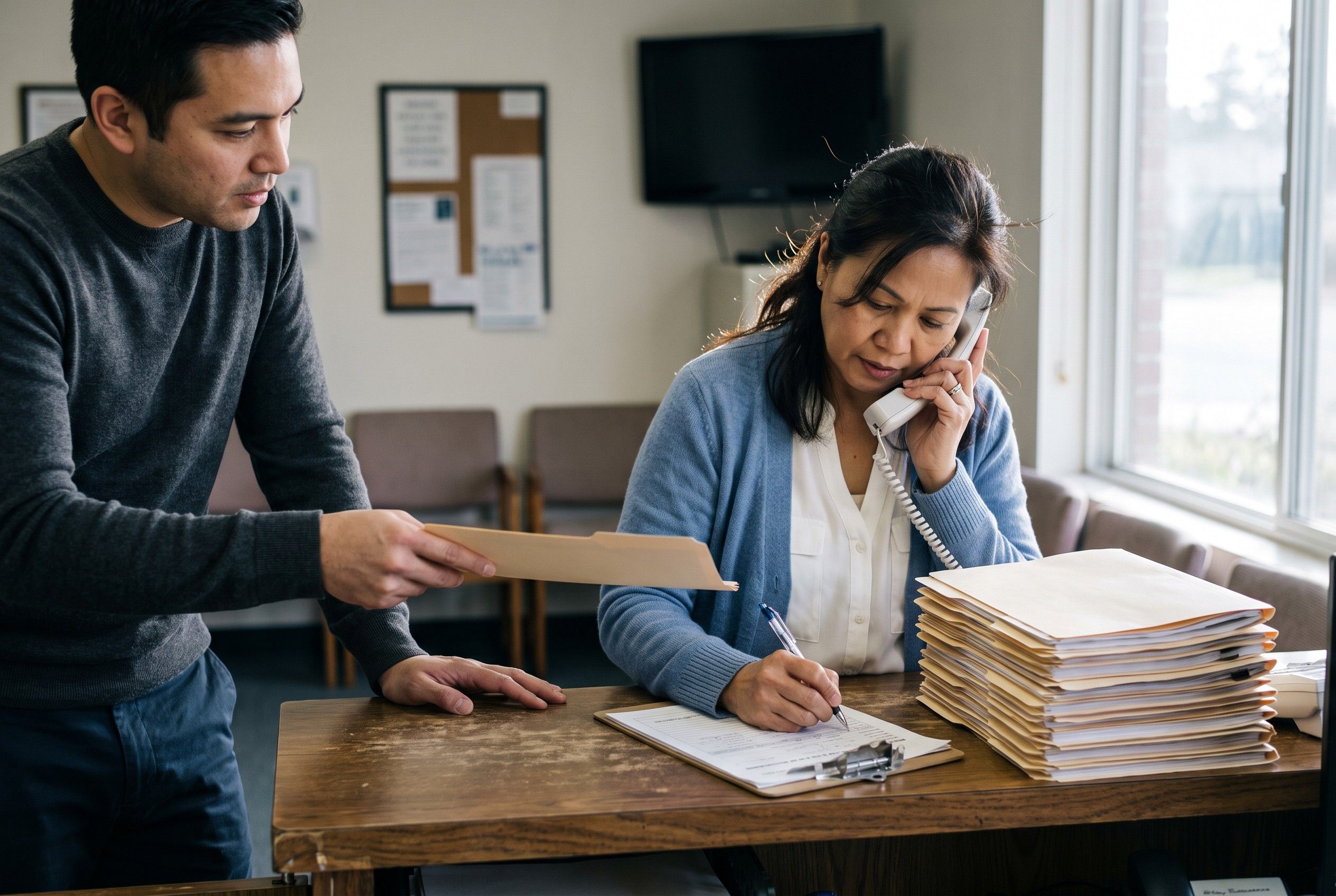
An order comes in by email, someone types it into the order system, then types it again into accounting. Every copy is another chance for a mistake that turns up at month end.
Emails sit until someone sorts them
Requests land in a shared inbox and wait until someone has time to read them and pass them on. Nobody can say how long the oldest one has been sitting there.
The same replies, written from scratch
Your team answers the same customer questions every week, looking up the same records and writing nearly the same email each time.
What this covers
Process redesign
We follow a piece of work from start to finish and take out the steps that add nothing.
System integrations
Your systems pass information to each other, so nobody types the same thing twice.
Process automation
Repetitive steps such as sorting, routing, reminders and updates run on their own.
Document processing
Software reads invoices, forms and emails and pulls out the details you need.
AI assistants
Assistants that draft replies and answer questions from your own policies, manuals and records.
AI assessments
A straight answer on where AI would help your business, where it would not, and how reliable a tool really is.
What you get
- A written map of how the work runs today
- Training and written notes on how each piece works
- Repetitive steps done by software, and AI where it fits
- A person signs off what matters, and the software's actions are logged
How the project runs
Follow real work
We sit with the people who do the job and follow real orders, invoices or requests from start to finish, noting where the time goes and where mistakes get in.
Cut, then automate
First we drop the steps nobody needs. Then we agree which of the rest software takes over, and where a person still makes the call.
Build, test, hand over
We build it into the tools you already use and test it on your real work before anyone relies on it. Your team is trained and gets written notes on how each piece works.
A worked example
Take supplier invoices. In many businesses someone retypes each one into the accounting system, and a manager approves every single payment.
Today
- 1Invoice arrives by email
- 2Someone types it into accounting
- 3Someone checks it against the order
- 4A manager approves every invoice
- 5Payment goes out
After
- 1Invoice arrives by emailStep type: Same
- 2Software reads it and fills in the detailsStep type: Automated
- 3Software checks it against the orderStep type: Automated
- 4A manager approves only the exceptionsStep type: Person
- 5Payment goes outStep type: Same
Questions
Do we have to replace the software we use now?
Usually not. Most of the time the fix is getting the systems you already pay for to pass information to each other. If one of them really can't do the job, we tell you before anything is built and show you what replacing it would cost next to what it would save.
What happens when the software or the AI gets something wrong?
Anything it isn't sure about goes to a named person on your team with the details attached. Before it goes live we run it on a batch of your own past work and show you how often it gets things right. Its actions are logged, so you can see what it did and why.
Will my team have to stop what they're doing while you build this?
No. We need some time with the people who do the job, watching them work and asking questions, and we fit around their day. The new setup goes live one piece at a time, and the old way keeps running until the new one has shown it works.
Other services
Technology Strategy
An independent review of the software you pay for, and a clear plan for what to keep, replace, buy or build.
Software Development
Websites, apps and internal tools built around how your business works, and tested before anyone relies on them.
Data & Analytics
Your systems connected and your reports automated, so everyone works from the same trusted numbers.
Reach out to us today.
Tell us what you want to build or improve, from a new website or app to less manual work or clearer reports. We'll tell you honestly how we would approach it.